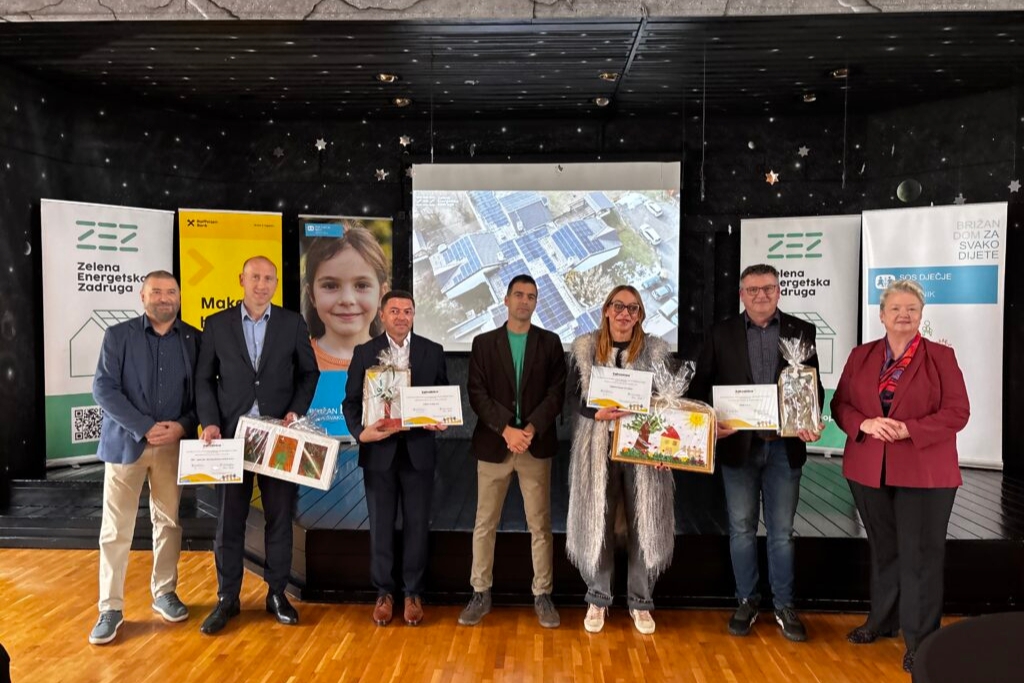
“Solar Day” at SOS Children’s Village Lekenik marked the completion of the second phase of the Village’s solarisation project. With a total installed capacity of 350 kilowatts, the solar power plant has officially entered permanent operation, making it the largest among SOS Children’s Villages in this part of Europe. More importantly, the solar power plant will generate significant annual savings on energy bills for SOS Children’s Village Lekenik.
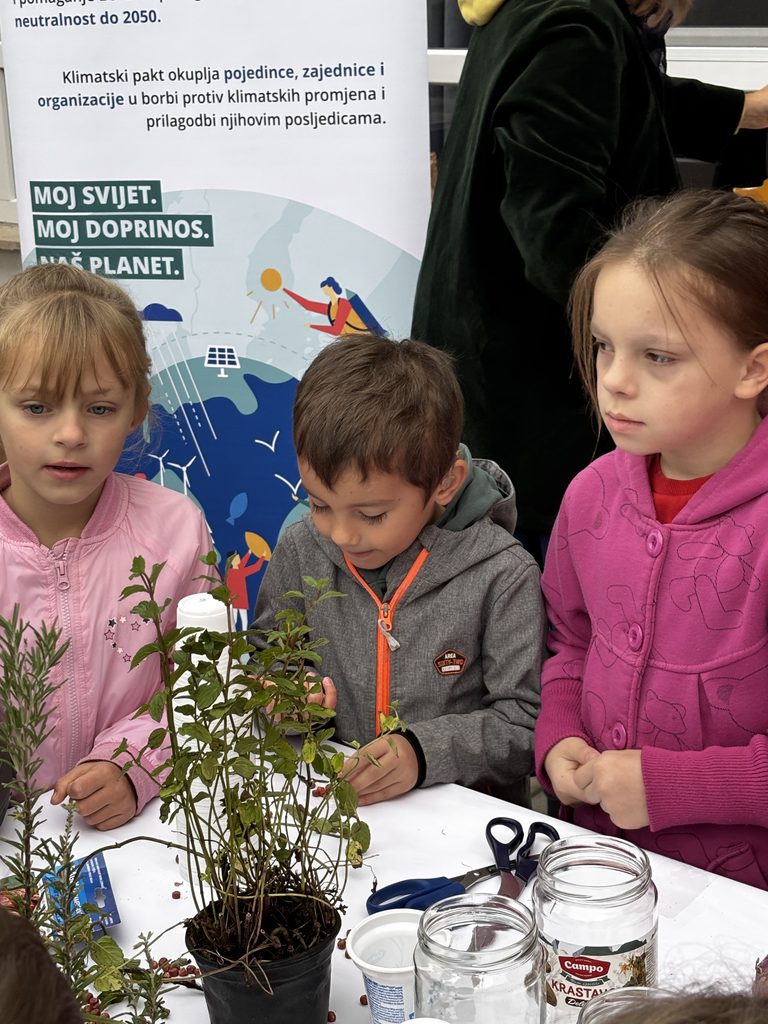
Solar Day brought together children and staff from SOS Children’s Village, the entire team of the Green Energy Cooperative (ZEZ), and volunteer EU Climate Pact Ambassadors Tihana Veljačić and Sandra Vlašić, who organised educational workshops for children from SOS Children’s Village and their young neighbours from Lekenik. The event was also supported by the Zagreb Film Festival, which features special screenings for children each year through its “My First Cinema Visit” programme.
Annual Electricity Costs Reduced by Almost 50%
The solarisation project at SOS Children’s Village Lekenik was born from the idea of using solar energy as a solution to achieve greater energy independence and long-term financial sustainability for the Village.
Before the project was implemented, annual energy bills at SOS Children’s Village Lekenik exceeded €80,000. With the completion of the second phase, annual savings from electricity consumed directly on-site and revenue generated by selling surplus electricity to the energy supplier are estimated at approximately €38,000.
Over the solar system’s minimum expected lifespan of 25 years, total savings are projected to reach €1.17 million.
“With the completion of the solarisation project at SOS Children’s Village Lekenik, we have taken an important step towards the long-term sustainability of our Village. We are particularly pleased that the savings generated will be invested directly in the children – through educational programmes, foreign language learning, summer holidays, and sports and creative activities that enrich their childhood.
This project demonstrates how investing in renewable energy can bring tangible benefits to both the environment and the community. We are grateful to all our partners who recognised this vision and contributed to creating better conditions for the children in our care,” emphasised Mario Čović, Director of SOS Children’s Village Lekenik.
Working Together for a Brighter Future for Children
A project of this scale would not have been possible without the collaboration of partners and donors – SOS Children’s Village Croatia, Raiffeisenbank, the Green Energy Cooperative (ZEZ), Kufner Group, and Biomasa Group – who collectively provided a donation of €340,000 to finance the solar power plant.
The project was managed by ZEZ’s expert team in cooperation with project partners and SOS Children’s Village Croatia. The journey from signing the agreement to achieving permanent operation involved system design, equipment procurement, installation, administrative procedures, obtaining the necessary permits, and trial operation of the power plant.
“We are proud to have demonstrated that our team can successfully deliver large-scale projects, coordinate partners, and manage every step of the process – from the initial idea to flipping the switch and bringing the power plant into permanent operation.
Projects like this simultaneously contribute to environmental protection, deliver tangible savings for SOS Children’s Village, benefit the local community, and support the ESG objectives of the partners involved.
At a time of climate crisis and volatile energy prices, we are sending a joint message that energy should be renewable and produced locally, for the benefit of society and the community.”
said Zoran Kordić, Managing Director of ZEZ.
A Model for Other Communities
The solarisation of SOS Children’s Village Lekenik is an example of how socially responsible ideas can be transformed into concrete projects that create long-term value.
The project demonstrates that this is much more than an energy or environmental initiative – it is also a powerful mechanism for ensuring the financial sustainability of non-profit organisations.
By combining social welfare, the energy transition, and local development, the project can serve as a model for other communities across Croatia and the wider region.
Liana Keserić, Chairwoman of the Management Board of Raiffeisenbank, stated:
“At RBA, we believe that sustainability is meaningful only when it goes beyond words on paper and makes a real difference in people’s lives. For us, the green transition is therefore not merely part of our business strategy, but an opportunity to support projects through partnerships that create a safer and better future.
The energy independence of SOS Children’s Village Lekenik is an excellent example of this approach. By reducing energy costs, additional resources become available to invest in the needs of children, while simultaneously contributing to a more sustainable way of life.
Through initiatives like this, we reaffirm our role as a bank that invests responsibly in the future of the communities in which it operates.”
The Green Energy Cooperative (ZEZ) continues its mission of promoting citizen-led energy initiatives and local renewable energy generation, serving as a trusted partner to large companies, small businesses, and local communities in building a sustainable future.
This is a story that recharges more than just batteries – and it does not end in Lekenik.
It is an invitation to new partners to join forces in developing projects that harness renewable and sustainable energy to deliver long-term positive impacts for society and local communities, making them better places to live.